What Is Laser Cutting? How Does It Work and Where Is It Used?
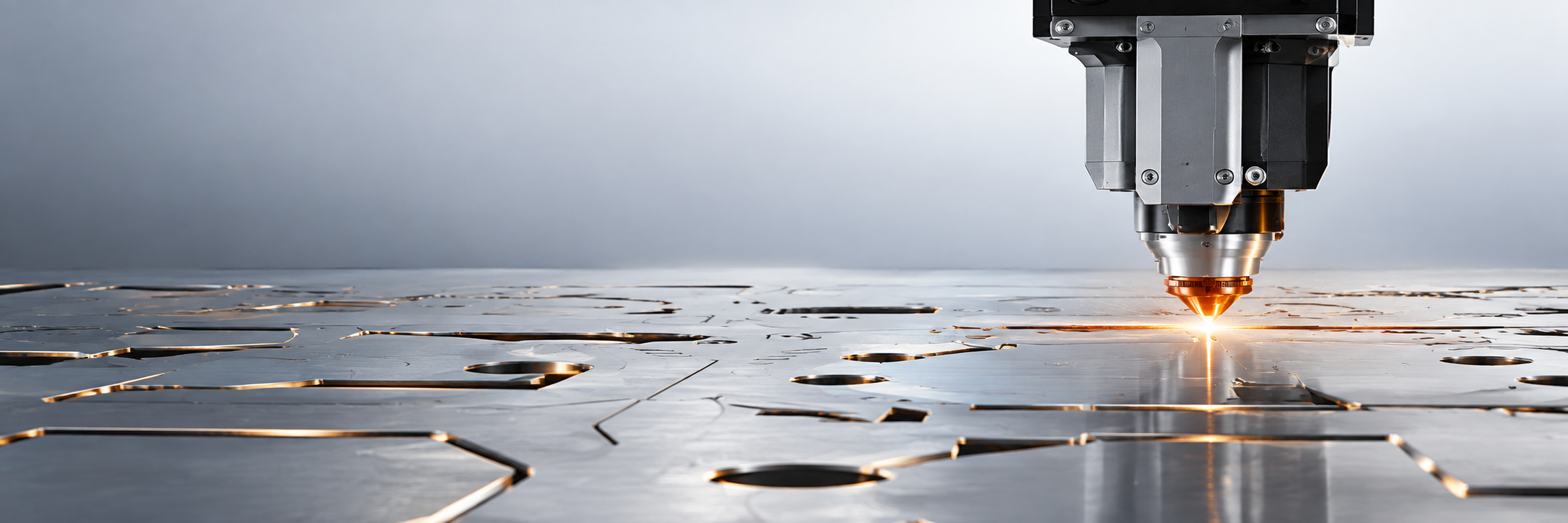
What Is Laser Cutting? How Does It Work and Where Is It Used? Laser cutting is a modern manufacturing process used to cut and process metal sheets with high precision. With CNC-controlled systems, technical drawings prepared in a digital environment can be transformed into precise geometries on metal sheets. Today, laser cutting is widely used across industries such as machinery manufacturing, automotive, steel construction, and energy. Its combination of precision, repeatability, and design flexibility has made it an important manufacturing technology. In this article, we explain what laser cutting is, how it works, its main advantages, and where it is commonly used. How Does Laser Cutting Work? In a laser cutting system, a high-energy laser beam is focused onto a specific point on the material through an optical system. The concentrated energy generated by the laser processes the material along the cutting path. During the cutting process, an assist gas helps remove molten material from the cutting zone. The movement of the laser head is controlled by a CNC system. This allows the machine to follow the geometry defined in the technical drawing and produce the desired part. In simple terms, the process can be summarized as: Technical Drawing → CNC Programming → Material Setup → Laser Cutting → Part Inspection What Is CNC Laser Cutting? CNC laser cutting is a laser cutting process controlled by a computer-based CNC system. The CNC system controls the movement of the laser head according to the coordinates defined in the technical drawing. This system makes it possible to manufacture the same part repeatedly. For example, if a machine manufacturer needs hundreds of identical components, the same production program can be used to manufacture parts with the same geometry. This makes CNC laser cutting particularly suitable for applications that require consistent production and repeatability. What Materials Can Be Laser Cut? Laser cutting can be used to process a wide range of metal materials. Commonly processed materials include: * Carbon steel * Structural steel * Stainless steel * Alloy steel * Aluminum * Aluminum alloys However, each material reacts differently to the laser beam. Therefore, cutting parameters need to be adjusted according to the material being processed. Material type, thickness, surface condition, and the desired cutting quality are important factors that need to be considered during the manufacturing process. What Are the Advantages of Laser Cutting? There are several reasons why laser cutting is widely used in modern metal manufacturing. High Precision The ability to focus the laser beam onto a very small area allows detailed and precise geometries to be produced. This is particularly important for machine components, connection plates, and custom-designed parts where dimensional accuracy is critical. Complex Geometries Laser cutting is not limited to parts made up of straight lines. Circular holes, slots, curved contours, and complex shapes can be produced using CNC-controlled systems. Repeatability Because the production process is controlled by a CNC system, the same program can be used repeatedly. This helps manufacturers produce consistent parts across different production batches. Design Flexibility Laser cutting provides a high degree of design flexibility by allowing complex geometries and custom-designed components to be manufactured. This flexibility is particularly valuable for custom manufacturing applications. Optimized Material Usage Parts can be positioned efficiently on a metal sheet to optimize material usage. This process is known as nesting and is particularly important when manufacturing large quantities of parts. Where Is Laser Cutting Used? Laser cutting is used across a wide range of industries. Machinery Manufacturing Machine frames, connection plates, flanges, and custom-designed components can be manufactured using laser cutting. Automotive Laser cutting is used in automotive manufacturing and automotive supply chains for various metal components. Steel Construction Connection plates, support components, and various structural elements can be produced using laser cutting. Energy Various metal components used in energy equipment and machinery can be manufactured using laser cutting. Industrial Equipment Laser-cut components can be used in conveyor systems, production lines, machinery, and custom industrial equipment. Agricultural Machinery Connection components, structural parts, and custom metal components used in agricultural machinery can also be produced using laser cutting. Why Is Technical Drawing Important for Laser Cutting? The technical drawing is one of the most important elements of the laser cutting process. The geometry, dimensions, and holes of the part to be manufactured are defined in the technical drawing. Common file formats used for production include DWG, DXF, and PDF. A well-prepared technical drawing can help: * Reduce production errors * Speed up the quotation process * Ensure that part dimensions are clearly understood * Make production planning easier Critical dimensions, hole diameters, and tolerances should be clearly specified. What Affects Laser Cutting Quality? The quality of a laser-cut part is not determined by the machine alone. The main factors that can affect cutting quality include: * Material type * Material quality * Material thickness * Cutting parameters * Assist gas * Focus position * Nozzle selection * Cutting speed * Part geometry As a result, the same technical drawing can produce different results under different manufacturing conditions. Proper parameter selection and process control are important for achieving consistent cutting quality. Laser Cutting and Other Cutting Methods Laser cutting is one of several cutting technologies used in the metalworking industry. Other common cutting methods include: * Plasma cutting * Oxy-fuel cutting * Waterjet cutting * Mechanical cutting Each method has its own advantages and suitable applications. The appropriate cutting method should be selected based on factors such as material, thickness, part geometry, tolerances, production volume, surface quality, and cost. For this reason, the complete project requirements should be evaluated when selecting a manufacturing method. Why Choose Laser Cutting? Laser cutting has an important place in modern metal manufacturing because it combines precision, design flexibility, and CNC-controlled production. It can be particularly effective for custom-designed parts, components requiring repeatable production, and parts with complex geometries. Combining digital design data with automated manufacturing systems makes it easier to transform technical drawings into physical metal components. Laser Cutting with Fabensan Fabensan is a digital metal manufacturing platform designed to digitalize and simplify metal production processes. You can submit your technical drawings in DWG, DXF, or PDF format and request a quotation for your manufacturing project. Depending on the material, geometry, and manufacturing requirements of your project, the most suitable production method can be evaluated. Fabensan aims to make the process between technical drawing and manufacturing faster and easier. Submit your technical drawing and turn your design into a manufactured part. Fabensan The Digital Ecosystem of Metal Manufacturing